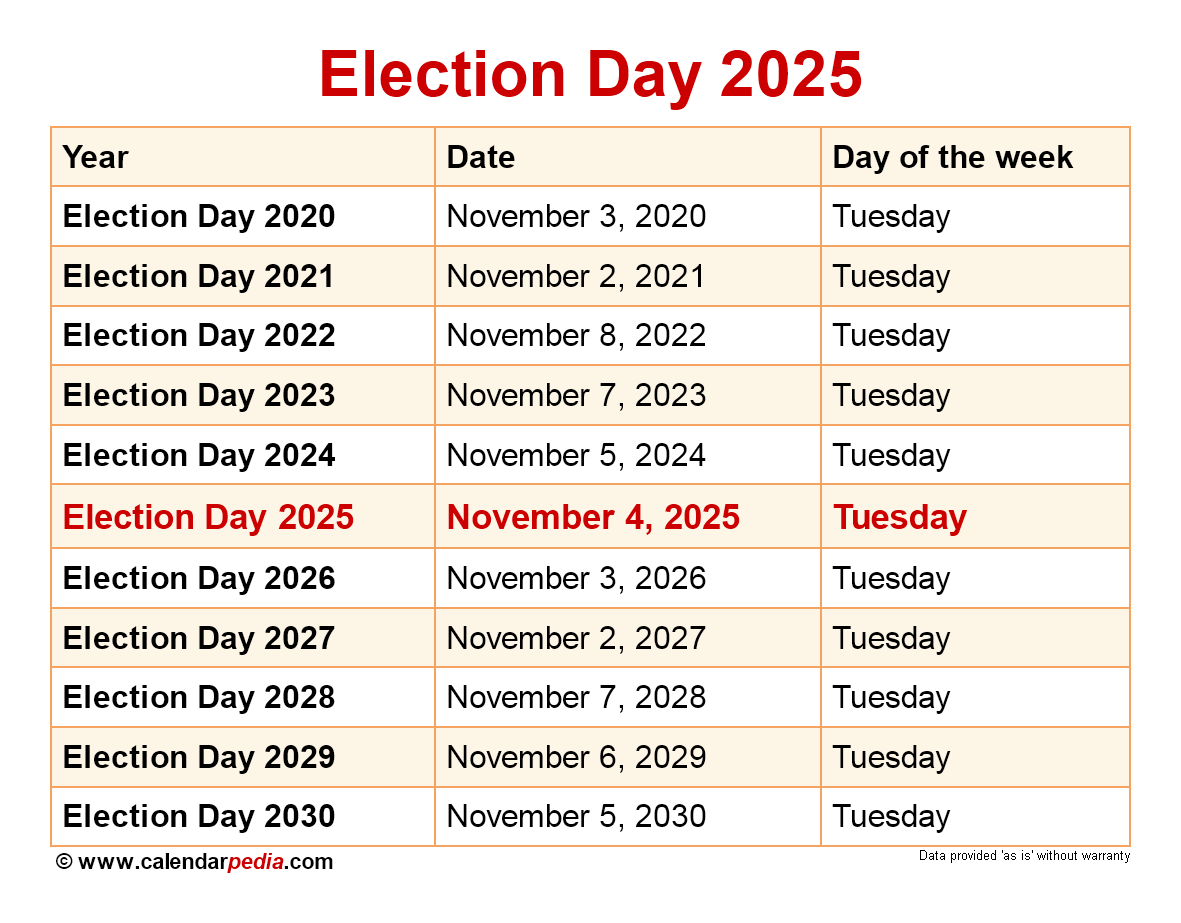
Election Day in the United States is the day when voters cast their ballots to elect candidates for various public offices. The next Election Day will be held on Tuesday, November 5, 2025.
On Election Day, voters will have the opportunity to vote for candidates for president, vice president, members of the United States Senate and House of Representatives, and various state and local offices. In some states, voters will also be able to vote on ballot initiatives, which are questions or proposals that are put before voters for their approval.
The upcoming Election Day is expected to be one of the most important in recent history. The outcome of the election will have a significant impact on the future of the United States, both domestically and internationally.

Election Day 2025 will be a pivotal moment in American history. Here are seven key points to remember:
Make sure you are registered to vote and that you have a plan to cast your ballot on Election Day. Your vote matters!

Election Day 2025 will be held on Tuesday, November 5, 2025. This is the date that has been set by law for the next presidential election.
The tradition of holding Election Day on a Tuesday dates back to the early days of the United States. In 1845, Congress passed a law that established the first Tuesday after the first Monday in November as the day for presidential elections. This was done to give voters time to travel to their polling places, which were often located far from their homes.

The month of November was chosen for Election Day because it is typically a time of good weather in most parts of the country. This makes it easier for voters to get to their polling places.
No, Election Day is not a federal holiday. However, many states have laws that allow employees to take time off work to vote.
If Election Day falls on a religious holiday, some states may allow voters to cast their ballots on the following day. However, this is not always the case, so it is important to check with your local election officials to find out what the rules are in your state.
It is important to note that the date of Election Day can be changed by Congress. However, this is a rare occurrence. The last time the date of Election Day was changed was in 1971, when it was moved from the first Tuesday after the first Monday in November to the Tuesday after the first Monday in November.
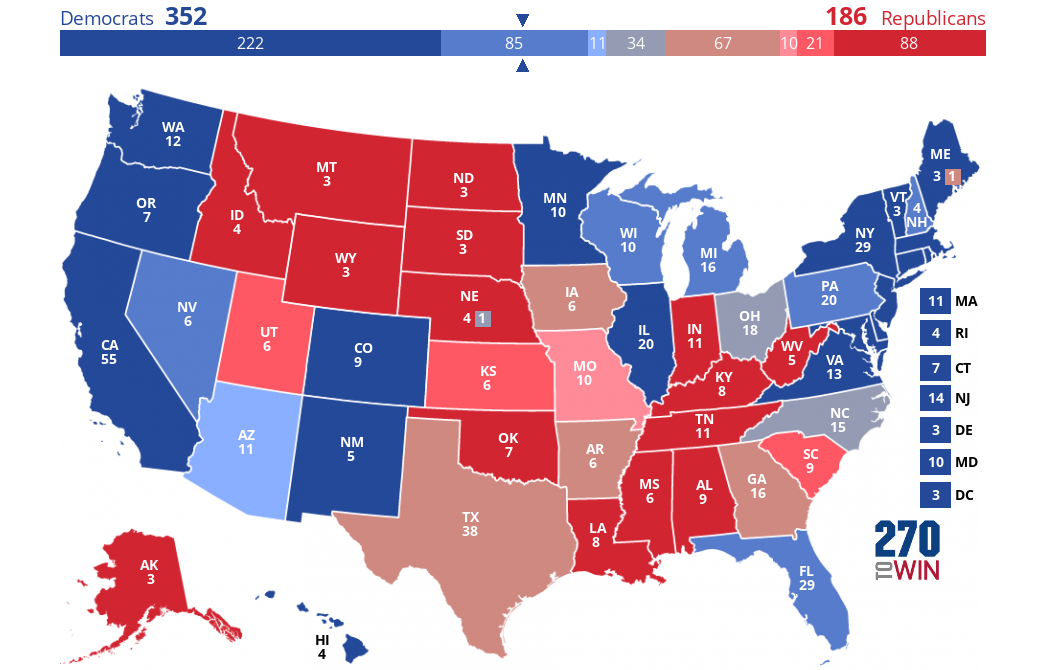
The presidential election is the most important race on the ballot in 2025. The winner of the election will serve as president of the United States for a four-year term. The president is responsible for leading the country, both domestically and internationally. The president also has the power to veto laws passed by Congress and to appoint Supreme Court justices.

The presidential election is a two-step process. In the first step, voters in each state cast their ballots for a slate of electors. The number of electors that each state gets is based on its population. The candidate who wins the most electoral votes wins the presidency.
In the second step, the electors meet in their respective states and cast their votes for president and vice president. The candidate who wins the majority of electoral votes becomes president. If no candidate wins a majority of electoral votes, the House of Representatives chooses the president from among the top three candidates.
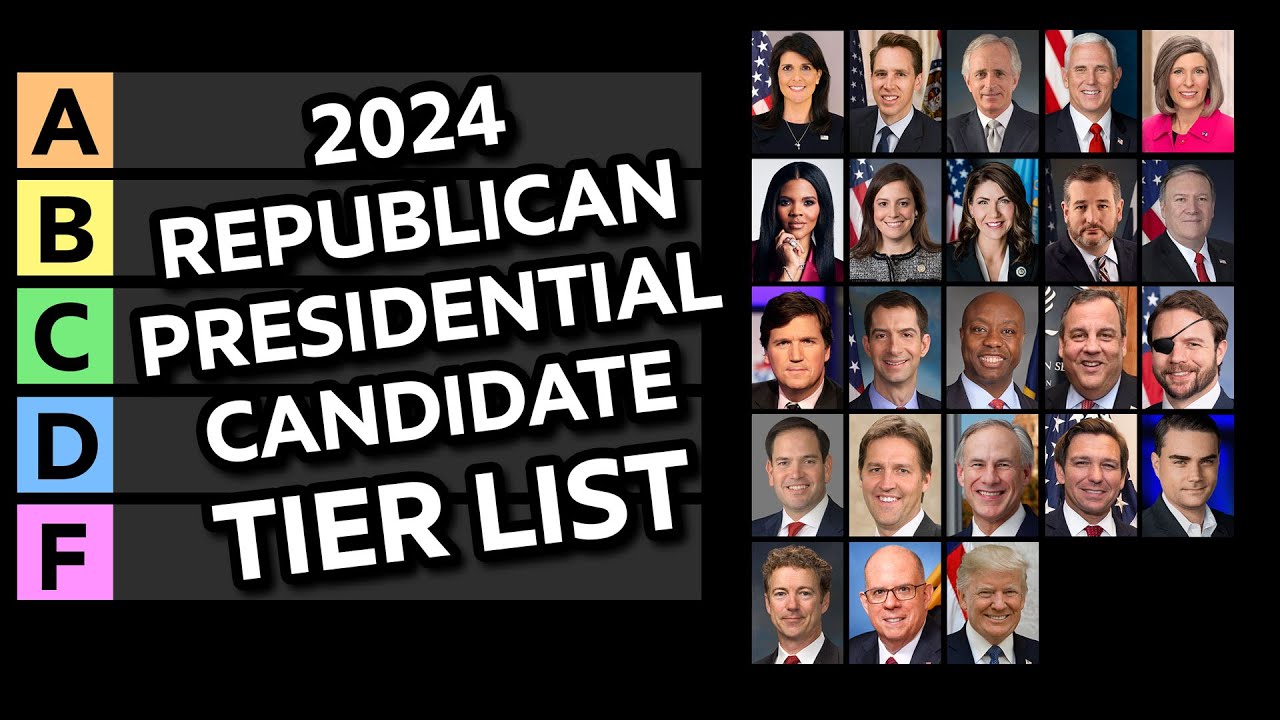
The 2025 presidential election is expected to be one of the most competitive in recent history. There are several candidates who have already announced their intention to run for president, and the field is likely to grow in the coming months. The outcome of the election will have a significant impact on the future of the United States.
It is important to note that the presidential election is not the only race on the ballot in 2025. Voters will also be casting ballots for members of the Senate and House of Representatives, as well as for various state and local offices. It is important to make sure that you are registered to vote and that you have a plan to cast your ballot on Election Day.
In addition to the presidential election, voters in 2025 will also be casting ballots for members of the Senate and House of Representatives. The Senate is the upper chamber of the United States Congress, and the House of Representatives is the lower chamber. Together, the Senate and House make up the legislative branch of the federal government.
The Senate has 100 members, two from each state. Senators are elected to six-year terms, and one-third of the Senate is up for election every two years. In 2025, 33 Senate seats will be up for election.
The House of Representatives has 435 members, who are elected to two-year terms. The number of representatives that each state gets is based on its population. In 2025, all 435 House seats will be up for election.
The Senate and House of Representatives have different powers and responsibilities. The Senate has the power to confirm presidential appointments, ratify treaties, and conduct impeachment trials. The House of Representatives has the power to impeach the president, initiate all revenue bills, and declare war.
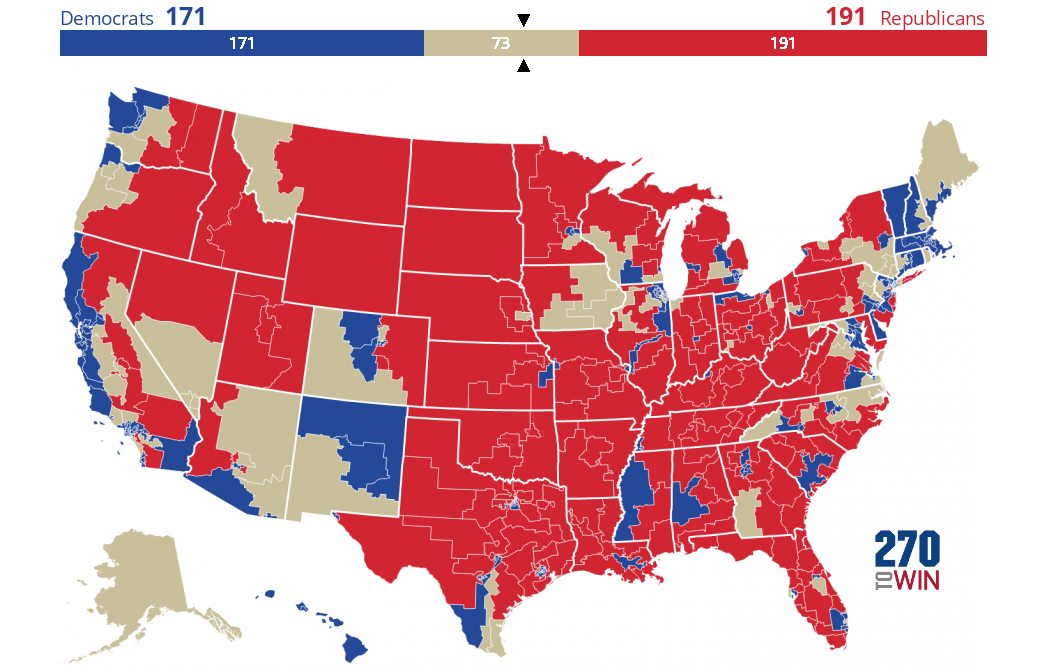
The outcome of the Senate and House elections in 2025 will have a significant impact on the balance of power in the federal government. If one party controls both the Senate and the House, it will be able to pass legislation more easily. If the two chambers are controlled by different parties, it will be more difficult to pass legislation.
In addition to the presidential, Senate, and House elections, voters in 2025 will also be casting ballots for a variety of state and local offices. These offices include governors, lieutenant governors, state legislators, county executives, mayors, and city council members.
Governors are the chief executives of their states. They are responsible for overseeing the state government and enforcing state laws. Governors are elected to four-year terms.
Lieutenant governors are the second-highest ranking officials in their states. They preside over the state senate and may also have other duties, such as overseeing elections or serving as the governor’s chief of staff. Lieutenant governors are elected to four-year terms.
State legislators are the members of the state senate and assembly. They are responsible for passing laws and overseeing the state budget. State legislators are elected to two- or four-year terms.
County executives are the chief executives of their counties. They are responsible for overseeing the county government and enforcing county laws. County executives are elected to four-year terms.
The outcome of the state and local elections in 2025 will have a significant impact on the governance of states and localities across the country. Voters should make sure that they are informed about the candidates and the issues before casting their ballots.
In addition to voting for candidates, voters in some states will also be able to vote on ballot initiatives. Ballot initiatives are questions or proposals that are put before voters for their approval. Ballot initiatives can cover a wide range of topics, such as taxes, education, healthcare, and environmental protection.
Ballot initiatives are typically proposed by citizens or groups of citizens. If a petition with a sufficient number of signatures is submitted to the state government, the initiative will be placed on the ballot for voters to decide.
Ballot initiatives can be either binding or advisory. Binding ballot initiatives become law if they are approved by a majority of voters. Advisory ballot initiatives do not become law, but they can express the will of the voters on a particular issue.
Ballot initiatives can have a significant impact on state policy. For example, in 2012, voters in Colorado passed a ballot initiative to legalize recreational marijuana. In 2016, voters in California passed a ballot initiative to increase the minimum wage.
Voters should carefully consider the ballot initiatives that they are voting on. Ballot initiatives can have a significant impact on their lives and the lives of their communities.
Voter turnout in the 2025 election is expected to be high. There are a number of factors that are contributing to this expectation, including the following:
High voter turnout is important for a number of reasons. First, it ensures that the election results are representative of the will of the people. Second, it helps to legitimize the election results and reduce the risk of challenges or disputes.
If you are eligible to vote in the 2025 election, it is important to make sure that you are registered to vote and that you have a plan to cast your ballot. Your vote matters!
The outcome of the 2025 election will have a significant impact on the future of the United States. The president and other elected officials will make decisions that will affect the country for years to come.
One of the most important issues that the next president will face is the economy. The economy is currently facing a number of challenges, including inflation, rising interest rates, and a potential recession. The next president will need to make decisions about how to address these challenges and promote economic growth.
Another important issue that the next president will face is climate change. Climate change is already having a significant impact on the United States, and it is expected to become even more severe in the future. The next president will need to make decisions about how to reduce greenhouse gas emissions and mitigate the effects of climate change.
The next president will also face a number of foreign policy challenges. The United States is currently facing challenges from countries such as China, Russia, and Iran. The next president will need to make decisions about how to deal with these challenges and protect the interests of the United States.
The outcome of the 2025 election will have a profound impact on the future of the United States. Voters should carefully consider the candidates and the issues before casting their ballots.
Question 1: When is Election Day 2025?
Answer: Election Day 2025 is on Tuesday, November 5, 2025.
Question 2: What offices are up for election in 2025?
Answer: The following offices are up for election in 2025:
Question 3: How can I register to vote?
Answer: Voter registration requirements vary from state to state. You can find out how to register to vote in your state by visiting the website of your state’s election commission.
Question 4: Where can I find my polling place?
Answer: You can find your polling place by visiting the website of your state’s election commission or by contacting your local election officials.
Question 5: What do I need to bring with me to vote?
Answer: Voter ID requirements vary from state to state. You can find out what you need to bring with you to vote in your state by visiting the website of your state’s election commission.
Question 6: What time do the polls open and close?
Answer: Poll hours vary from state to state. You can find out what time the polls open and close in your state by visiting the website of your state’s election commission.
Question 7: What if I can’t vote on Election Day?
Answer: Many states offer early voting, which allows you to cast your ballot before Election Day. You can find out if your state offers early voting by visiting the website of your state’s election commission.
If you have any other questions about Election Day 2025, please contact your local election officials.
Tip 1: Register to vote early. The deadline to register to vote varies from state to state, so it’s important to check the deadline for your state and register well in advance. You can find out how to register to vote in your state by visiting the website of your state’s election commission.
Tip 2: Make a plan to vote. Decide how you are going to get to your polling place on Election Day. If you are planning to vote early, find out where your early voting location is and what the hours are. You can find out this information by visiting the website of your state’s election commission.
Tip 3: Bring the necessary ID. Voter ID requirements vary from state to state, so it’s important to check the requirements for your state. You can find out what you need to bring with you to vote in your state by visiting the website of your state’s election commission.
Tip 4: Be informed about the candidates and issues. Before you vote, it’s important to research the candidates and the issues so that you can make informed decisions. You can find information about the candidates and the issues by reading news articles, watching debates, and attending candidate forums.
The 2025 election is one of the most important elections in recent history. The outcome of the election will have a significant impact on the future of the United States. It is important to make sure that you are registered to vote and that you have a plan to cast your ballot on Election Day.
Election Day 2025 is one of the most important elections in recent history. The outcome of the election will have a significant impact on the future of the United States, both domestically and internationally.
It is important to make sure that you are registered to vote and that you have a plan to cast your ballot on Election Day. Your vote matters!